Demand-side
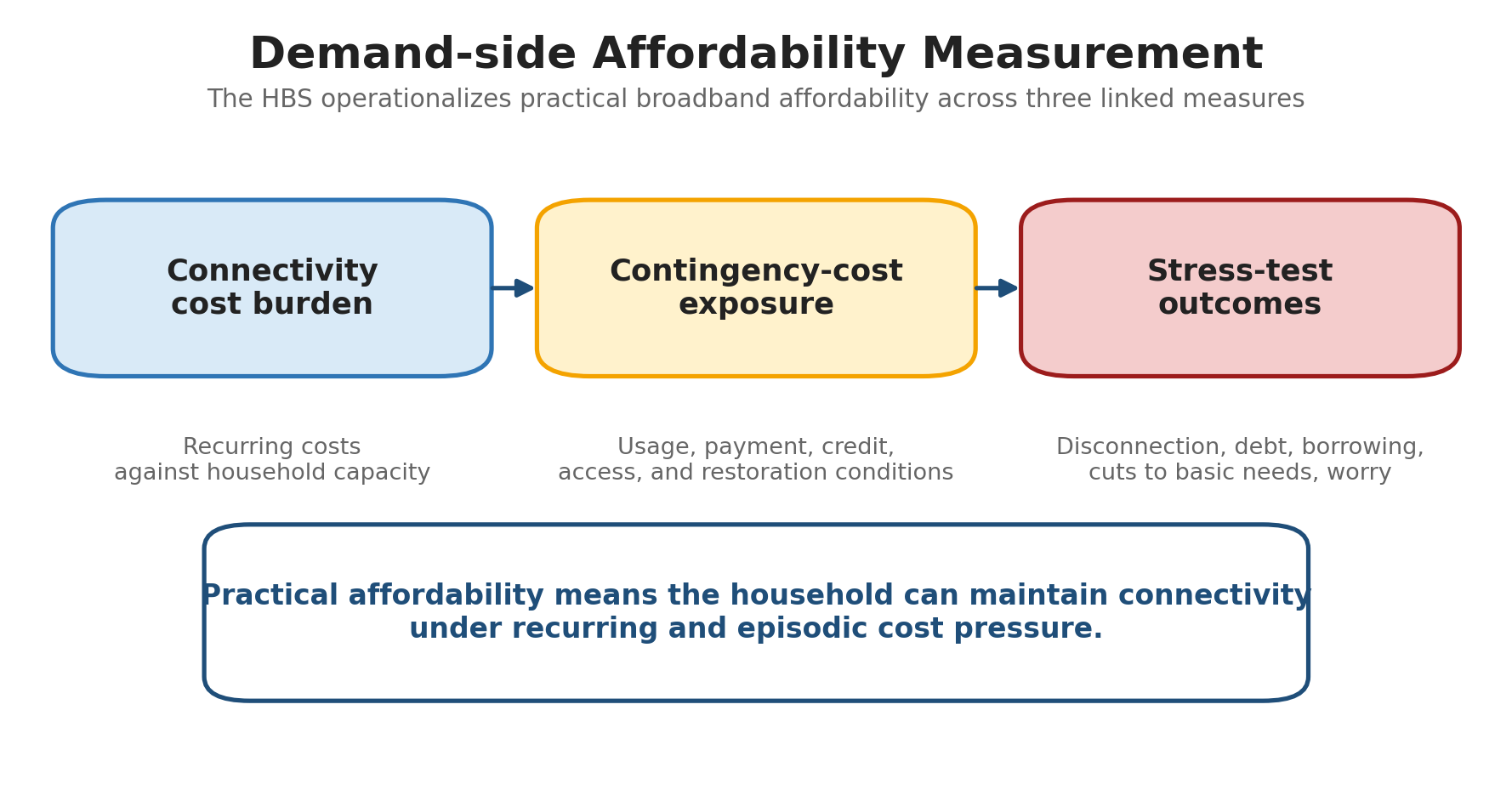
Practical Affordability Measurement
Household-level affordability assessment considers three distinct dimensions to estimate the realized household burden of connectivity – connectivity cost-burden, contingency-cost exposure and stress-test outcomes relative to the full cost structure of sustaining household internet services.
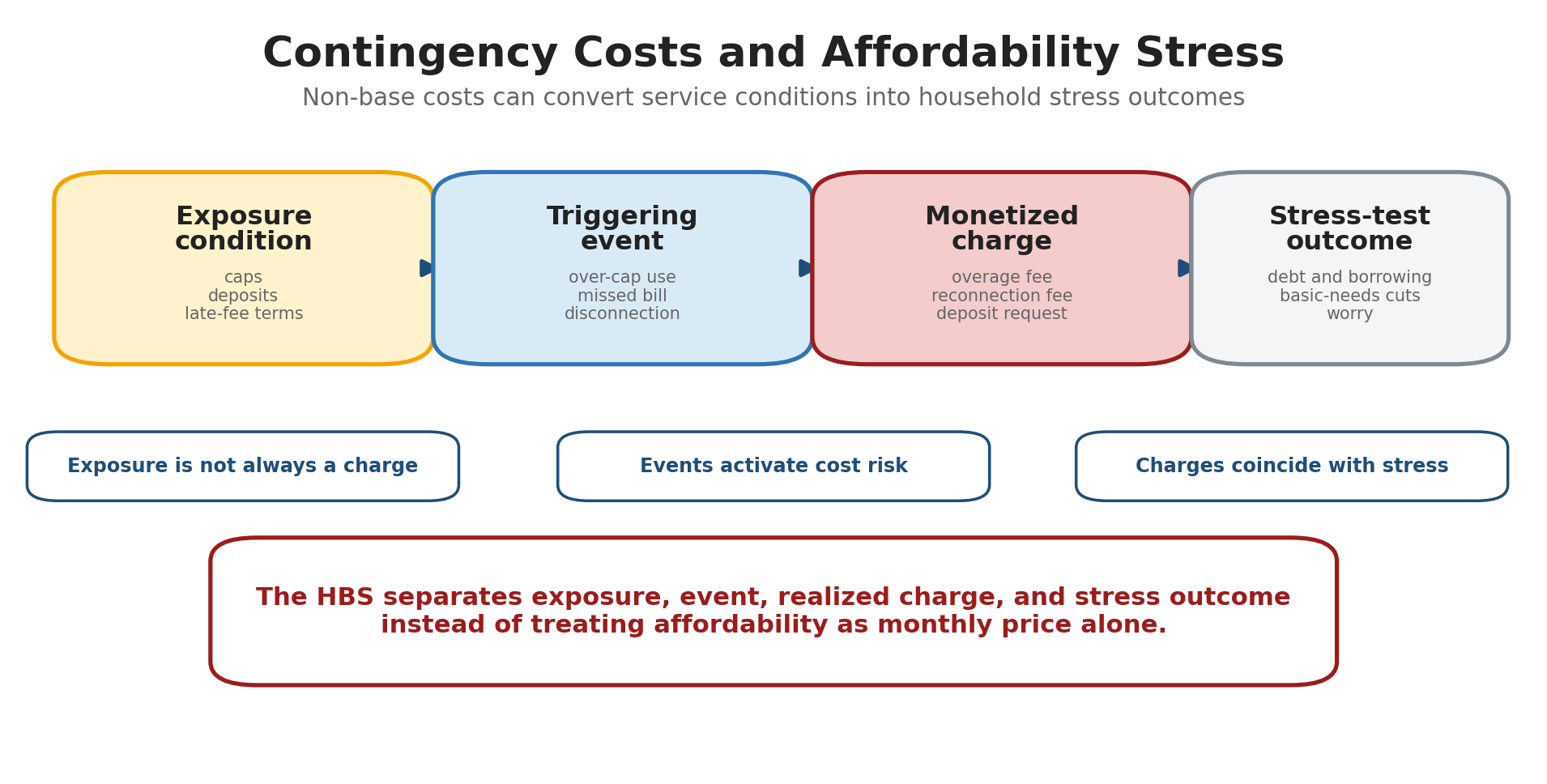
Contingency Costs Reveal Practical Affordability Stress
Contingency-cost exposure measured from non-base connectivity costs triggered by customer behaviour revealed significant differences in financial stress outcomes, including service disconnection, debt accumulation and budget adjustments for basic household expenses.
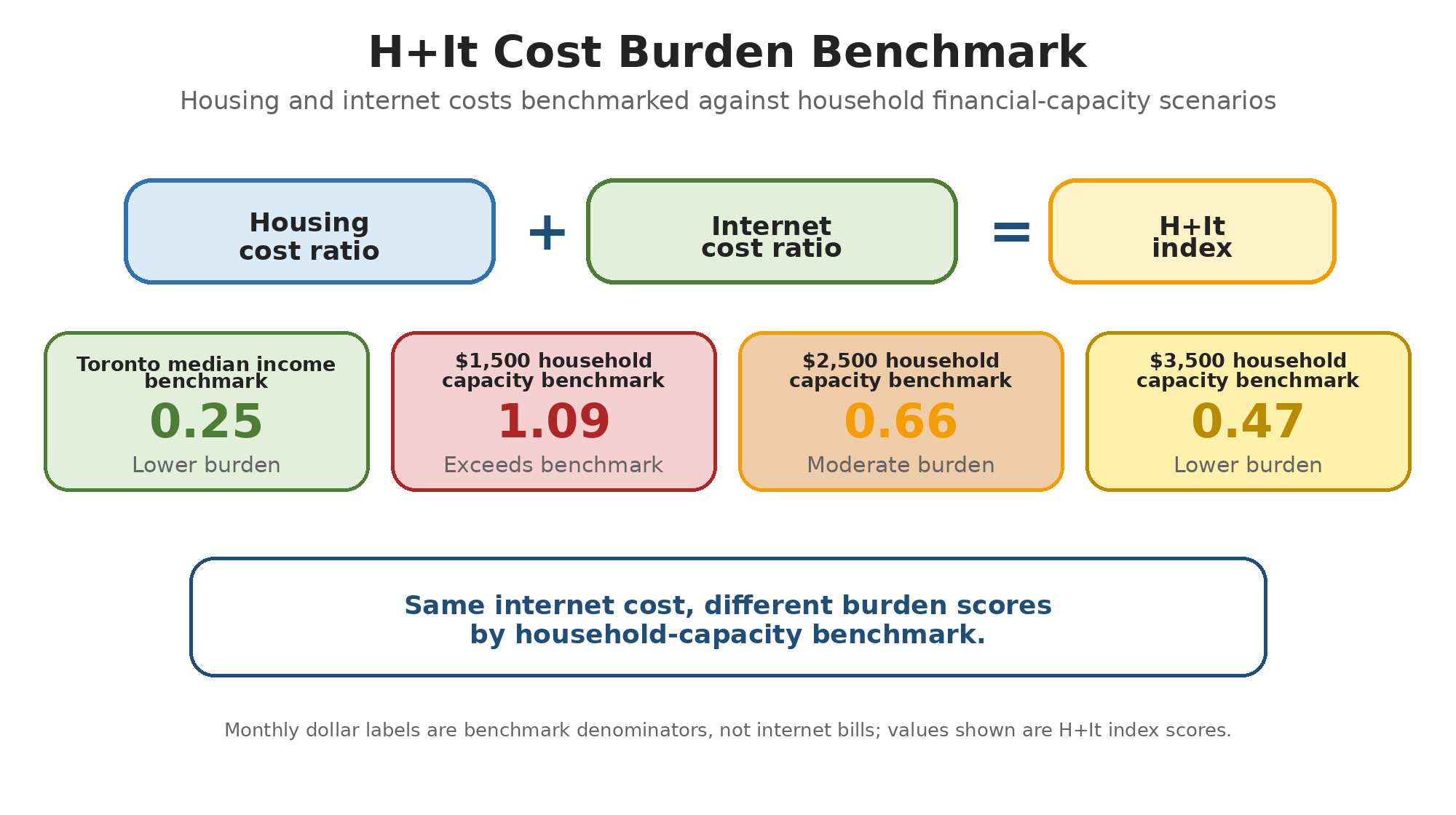
H+It as a Prospective Stress-Test Benchmark
The H+It benchmark is a complementary metric and prospective stress-test benchmark tool that presents a novel method for evaluating the impact of recurring internet costs and contingent costs against household financial capacity.
Supply-side
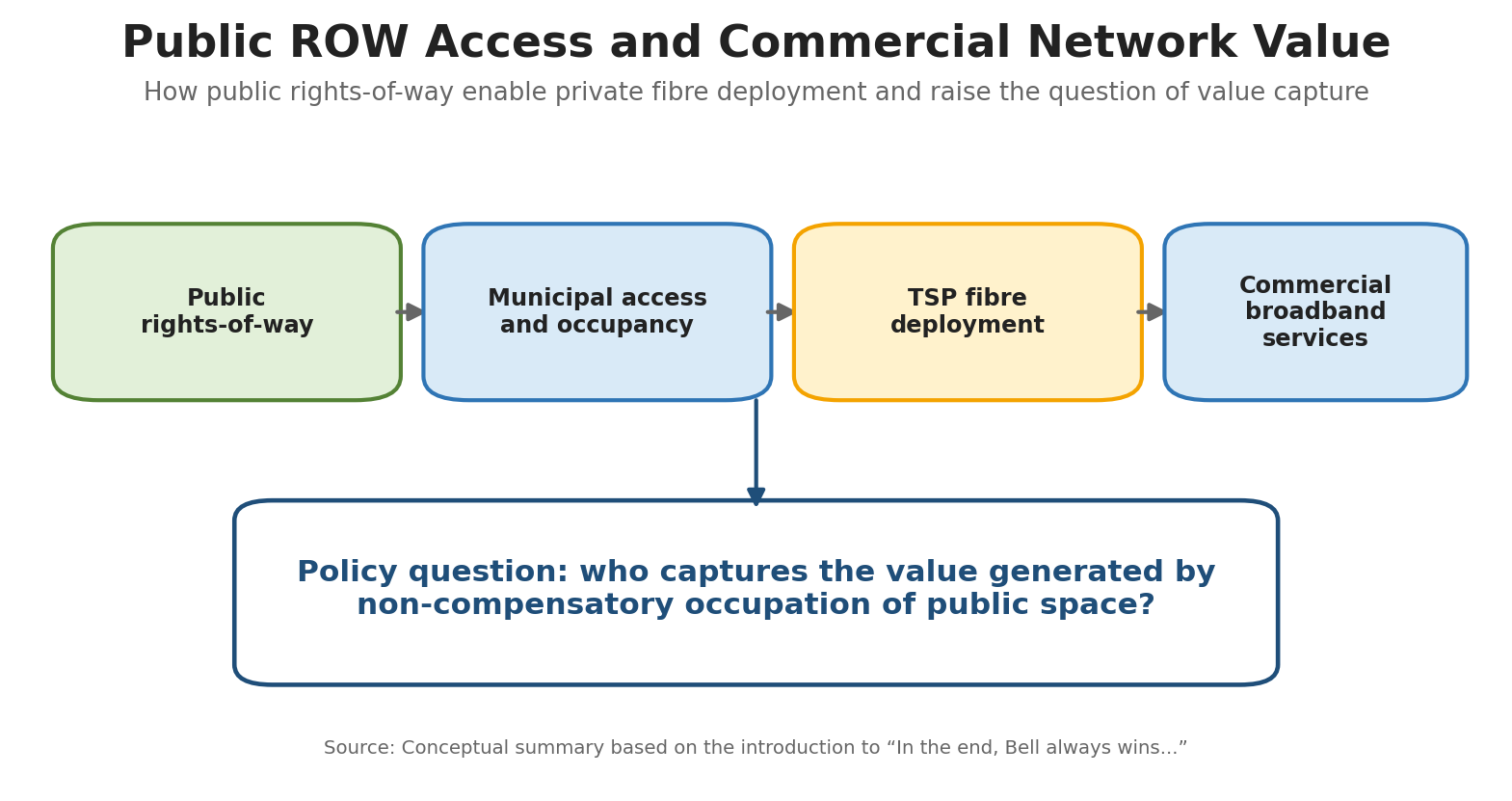
Public ROW access operates as an indirect subsidy to TSP infrastructure deployment
Telecommunications service providers benefit from access to public rights-of-way and tariff-free occupancy of municipal spaces.
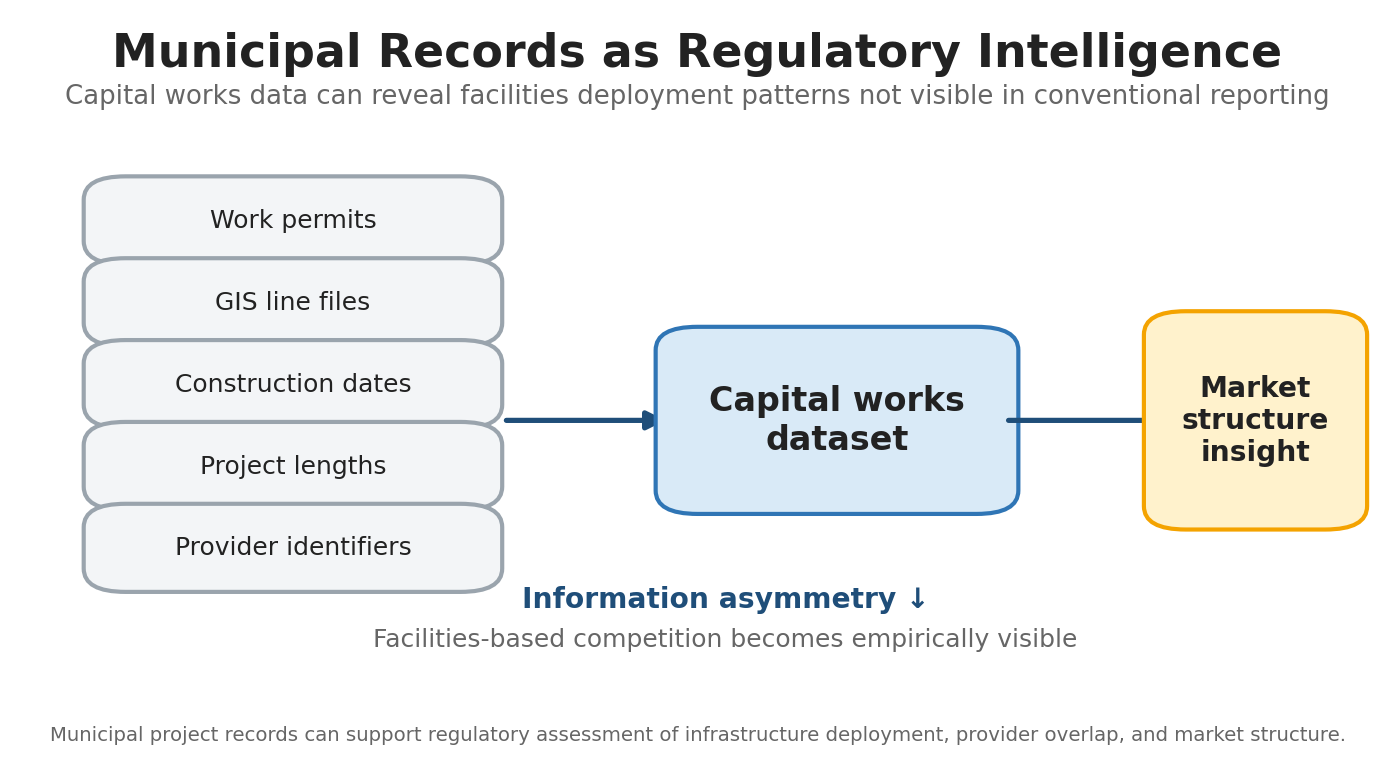
Capital works data reveals supply-side market structure otherwise obscured from regulators
Municipal capital works records contain geospatial locations, construction dates, timelines, linear lengths, and project directionality for fibre infrastructure.
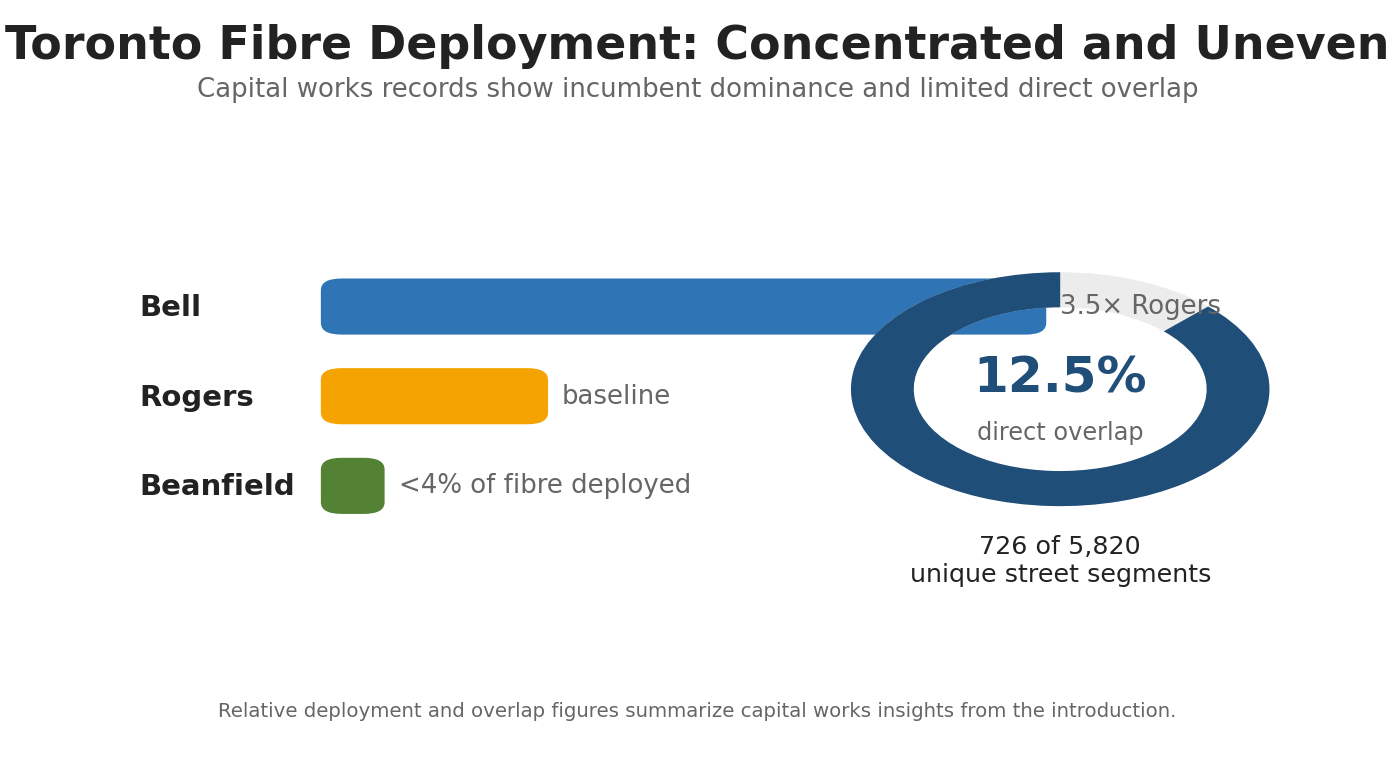
Toronto’s fibre market is nominally duopolistic but unevenly deployed
Bell outpaces Rogers by approximately 3.5:1, and direct incumbent overlap appears limited: only 12.5% of 5,820 unique street segments show parallel incumbent deployment.